
PLA and PolyCast Printed Patterns for Investment Casting: Shell Building and Firing Compared
Published:
2026-04-01
Eight patterns were made from 4 shapes and 2 types of printing wire. The technological adaptability of printing patterns was compared through tree assembly, coating, baking cleaning and gray iron casting.
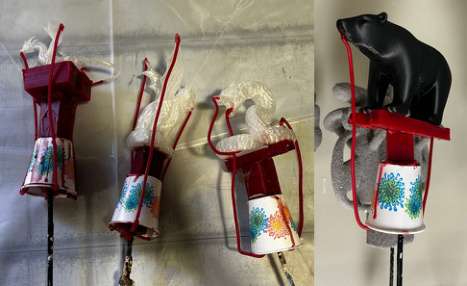
Original paper test drawing (CC BY 4.0)
Materials, Printed Structures and Shell Building
Small-batch precision casting often requires rapid pattern preparation after pattern changes. 3D printing can reduce the preliminary work of special wax pressing mold, but the printed part can be formed, which does not mean that it is applicable in coating, baking and casting. PLA and PolyCast, two kinds of wire materials specially used for investment casting, were selected to make the same shapes, and the differences were observed in each process. Grey cast iron was used for casting, so direct evidence of this study corresponds to this alloy and the shell making process.
Material A is Bambu Lab PLA Basic and Material B is Polymaker's PolyCast, which is a polyvinyl butyral type wire. Table 1 summarizes the physical properties that can be obtained for the two materials, with densities of approximately 1.24 and 1.10 g/cm³, respectively. The decomposition temperatures given in this paper are about 350 to 370 degrees Celsius and 260 degrees Celsius, respectively, and the Vicat softening temperatures are about 57 and 67 degrees Celsius. The authors emphasize that the data on thermal properties are limited and the behavior of the material during the whole calcination process needs further testing.
The reported in-plane Young’s moduli are 2580 ± 220 MPa for Material A and 1745 ± 151 MPa for Material B. Their tensile strengths are approximately 35 ± 4 MPa and 35.7 ± 1.7 MPa, respectively. Softening, decomposition and stiffness together affect the effect of pattern on the shell at elevated temperature, but these data are insufficient to calculate actual thermal stresses alone. The physical properties table was used as the material background and compared with the cracks and residues observed in the same shell making process.
Table 1 also lists ash differences. The paper reports an average ash content of 19.65 percent for PLA samples and 0.003 percent for PolyCast, which is quoted from the manufacturer's data. The two data are from different sources and cannot be regarded as a comparative measurement of the same batch of samples under the condition of System 1. During the subsequent actual cleaning of the mold shell, the authors observed that the residues of the two materials were significantly different, which provided supplementary evidence for the material data at the process level.
The background of the original paper shows that pattern internal filling can reduce material consumption and printing time, but also change the support and stiffness of the printed part. Higher fill ratios generally increase material and print time, and fill patterns may also affect mechanical performance. The study therefore recorded both the grid pattern and the percentage of each shape, enabling the firing observations to be traced back to the printed structure. For further quantitative comparison, the filling ratio should be changed after fixing the geometry, so as to distinguish the respective functions of materials and internal structures.
Snake, bear, dragon and griffin shapes were used in the experiment, taking into account the size, curvature and detail changes. Both types of wire are filled with the same grid according to their shape: 5 percent for snakes, 10 percent for dragons and griffins, and 15 percent for bears. Because the shape and fill ratio change simultaneously, this design focuses on the applicability of the material to different shapes, and cannot deduce the independent effect of fill ratio from the crack difference between bear and snake alone. After printing, the runner is made of wax and the pattern is mounted to the wax tree.
The first layer slurry formulation consists of 3.6 kg zircon powder, 0.95 kg silica sol, 0.0825 kg latex, and a small amount of surfactant and defoamer. The backing slurry consisted of 24.9 kg of Minco WDS, 9.1 kg of silica sol, 0.91 kg of latex and an equal mass of distilled water, with the corresponding additives added. The author compares patterns under the same coating system to avoid mixing size changes with wire changes.
Shell making: firstly, making 2 layers of zircon powder slurry with zircon sand, then making 2 layers of backing slurry with HD100 mullite, then 2 layers of backing slurry with coarse fused quartz and mullite sand scattering, and finally sealing slurry. Dry for at least 2 ½ hours between processes. The test drying chamber had no active environmental control, and the average temperature and average humidity of 4 measurements in 3 days were 20.9 ℃ and 29.4%, respectively. This record allows comparison results to correspond to actual dry conditions.
The primary baking was set at 815.d egree. C. for 20 minutes to remove the print pattern and harden the mold shell. After cooling inspection, rinse the mold shell and observe the internal ash and broken ceramics. Subsequently, the two types of shells are uniformly added as repair layers, and then the second baking is carried out at the same temperature and time, and finally gray iron is poured. Uniform repair means that the final casting behavior includes the contribution of the repair process, and the difference in the initial firing and the pouring results after repair shall be evaluated separately.
Pattern-Tree Assembly, Residues and Casting Results
Wax adheres to both materials during tree assembly, but PolyCast's smaller parts are harder to stick to. The operator needs to heat the wax end to nearly liquid, conform to the shape, wait for cooling to still plastic adjustment, and then completely cool. This step increases the preparation time of PolyCast patterns. The authors suggest that runners can be integrated directly into the print geometry to reduce late bonding, but this proposal requires a separate comparison of the tree and fill after printing.
At the coating and sanding stages, the two materials can adhere to the slurry well, and the author has not observed obvious material differences. Multi-layer coating forms thicker shell, which affects the subsequent damage resistance and shelling. The study did not measure shell strength alone, so explanations for the possibility of thicker shells improving crack resistance come mainly from process observations and literature background. In practice, the shell structure should be considered at the same time.
After the first baking, there are some small cracks on the surface of PolyCast shell, and one runner of serpentine sample is broken. Cracks and damage were more pronounced in the PLA group and were common on curved surfaces, edges, and corners. Figure 3 shows the bifurcation crack of the corresponding shell on the back of the PLA bear, and Figure 4 lists the other cracks of the dragon. The authors relate these locations to pattern geometry, but do not provide crack length statistics or stress measurements for each material.
When the mold shell was cooled and rinsed, PLA group had more ash and exfoliated ceramic debris, while PolyCast group had less ash inside. For precision casting production, these two types of residues are related to pre-casting cleaning and surface quality, so after baking, it should be observed whether the pattern is removed, whether the shell is damaged, and whether the cleaning will bring out more ceramics. Comparing only the printing speed of silk materials will miss this operation that may affect the turnover.
After repair and rebaking, all 8 shells were successfully poured with gray iron, and no molten steel overflow, shell cracking or metal leakage during pouring were observed. The thermal analysis of gray iron used in this paper shows that carbon content is about 3.37%, silicon content is about 2.23%, and carbon equivalent is about 4.12%. Casting success describes the stage at which the metal enters the mold shell, and whether the thin wall details are completely filled still needs to be judged after cooling and shelling.
The wings of dragon samples of both materials were not fully filled, and the weak parts were damaged during shelling. Castings of other shapes can be removed without obvious major defects. Thicker shells require greater force for cleaning, so underfilling and mechanical shelling may occur simultaneously on the same specimen. These phenomena are shown in Figure 5 and Figure 6 of the original paper, and the problems of the dragon sample are not all attributed to one kind of silk material.
This is an exploratory control, with the main evidence being qualitative observations at various stages. The authors consider that PolyCast causes less damage and residue to the shell in the baking stage, but the wax runner bonding takes more time. There is no obvious difference between the two types in slurry adhesion. It is suggested that thermal analysis and shell strength measurement should be used to supplement the evidence, and the filling ratio should be regarded as an independent variable to further judge its influence on the quality of shell and casting.
For factory trial, we can follow the idea recorded in this paper: the size of printed parts corresponds to different problems, such as filling structure, time required for tree assembly, coating adhesion, baking crack, cleaning residue and thin wall filling. The low ash content given by the material supplier is of reference value, but it needs to be verified with its own shell formula and heating system. The wire material, geometry and subsequent repair conditions are recorded together to determine which process is improved by replacing the pattern material.
The authors do not give uniform scrap rates, percentage improvements in size accuracy, or reductions in production costs. Reducing mold repair and cleaning time is a potential benefit based on observations, and integrally printed runners are also a follow-up test direction. For the workshop, this means first using the same shape to do small batch comparison, and then group tree, cleaning and repair time together to record, only then have the conditions to evaluate the impact of pattern change on the total production cycle.
Amal D. Wooldridge、Alan Druschitz,International Journal of Metalcasting,2026,DOI 10.1007/s40962-026-01948-w。 According to the original paper arrangement, with pictures quoted from the original paper.Original Paper · PDF
Related News

Xinghua Liangze Metal Products Co., Ltd. specializes in precision investment casting.
Contact us
- Service line
- 0523-83788318
- Telephone
- 1875249989713814494169
- 2082804352@qq.com
- Address
- Peima Industrial Zone, Dainan Town, Xinghua, Jiangsu, China
Copyright © 2024 Xinghua City Liangze Metal Products Co., Ltd
鲁公网安备37010402441776号粤ICP备2026145563号-2