
Balancing Permeability, Strength and Casting Surface Quality in Fused-Silica Shells
Published:
2026-09-28
A five-layer shell mold prepared from fused silica and silica sol was studied. Its properties for investment casting of multicomponent high alloy were evaluated by permeability, compression resistance, thermal expansion and practical casting.
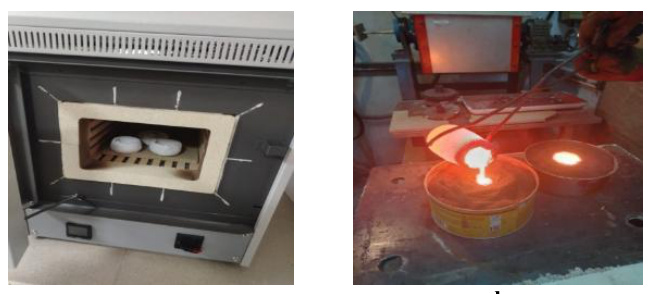
Ceramic shell after firing and pouring process, Figure 1 of the original paper (CC BY 4.0)
Raw Materials, Shell Building and Test Methods
The forming quality of high alloy castings is affected simultaneously by shell loading, thermal stability, outgassing and interface compatibility. The shell needs to maintain its size as the molten steel enters, and it needs to allow gas to escape smoothly from the cavity. Fused silica refractory filler was prepared from quartz of Aktas deposit in Kazakhstan, and silica sol was used as binder to investigate the performance of this set of materials in investment casting of Fe-Cr-Mn-Co-Ni-Nb-Mo quasi high entropy alloy. the property extending from that pac structure to the shell are evaluated and finally checked by surface examination of the trial castings.
Natural crystalline quartz will undergo crystal transformation when heated, accompanied by changes in volume and thermal properties. These changes in the mold shell may create internal stresses that affect size stability and crack resistance. Quartz melting and rapid cooling are studied to obtain amorphous structure and reduce the instability caused by the above crystal transformation. The silica content of the ore introduced by the author exceeds 99%. Raw material resources can be used as a source of local refractories, but the functional properties of the shell after formation still need to be determined by testing.
The raw material is first processed into particles of 5 to 10 mm and heated to 1750.d egree. C. in a laboratory induction furnace under an inert atmosphere for 15 minutes to fully melt. The inner wall of graphite crucible is coated with boron nitride protective slurry to reduce the possibility of carbon contamination of melt. After rapid cooling, the molten material is crushed and sieved to select 0.2 - 0.6 mm particles. Such a procedure determines both the phase of the filler and the accumulation of particles in the subsequent coating. Therefore, the obtained filler was examined by diffraction, microscopic observation and elemental analysis.
Wax mold consists of paraffin wax, microcrystalline wax and stearic acid, the mass fraction is 65%, 25% and 10% in turn, after melting at 75 - 80 DEG C poured into silicone rubber mold. The wax pattern is removed and cleaned with ethanol to improve the adhesion of the first layer. Ceramic slurry is prepared according to mass, fused silica accounts for 70%, 15A silica sol accounts for 25%, distilled water accounts for 5%. The silica sol itself contains 32 percent silica. After mechanical stirring for 15 minutes, the average dynamic viscosity of the slurry was 43.2 mPa·s.
The first layer is dip coated and sprinkled with fused silica particles of about 0.2 mm, and the next 4 layers are coated with the same principle, but the sand particle size is changed to 0.3 - 0.6 mm, forming a total of 5 layers of ceramic shell. Each layer is dried for four to six hours at 20 to 25 degrees Celsius and 40 to 60 percent relative humidity. The slurry composition, grit grading, and layer-by-layer drying together constitute the shell making conditions evaluated. Subsequent changes to one of these items may change the porosity and strength of the shell.
After roasting, the permeability was evaluated by the passage time of a specified volume of air under a constant pressure difference. The instrument was a 04315M permeability tester, and each group was repeated 3 times. Residual compressive strength was measured using an Instron tester at a beam speed of one millimeter per minute and the results of the three specimens were expressed as mean and standard deviation. the linear expansion t is carried out in air with a temperature rise of one degree celsius per minute up to 1200 c and that change in length is record continuously. These tests correspond to exhaust capacity, load bearing capacity and heated size changes, respectively.
Element analysis of the contact surface between filler and casting was carried out by scanning electron microscope (SEM) and energy dispersive spectrometry (EDS). Each spectrum was acquired for approximately 30 seconds. Roughness of castings is measured at 3 locations, sampling cutoff length is 2.5 mm, and finally Ra is averaged at 3 locations. The authors use these measurements at different scales to relate material preparation, shell loading behavior, and casting surface conditions, rather than assuming that all properties have been verified by appearance alone.
The original compression test uses the residual compressive strength of the calcined sample, which belongs to different test conditions from the high temperature strength of the immediate bearing at pouring temperature. The thermal expansion test records the length change continuously during heating, and the obtained linear expansion coefficient is used to describe the size response of the material when heated. Keep the test temperature, loading speed and sampling method together to give the numbers comparable meaning. For example, when the strength values of the two materials are close, the loading method, sample size and baking state are different, and the actual safety margin under the impact of molten steel cannot be judged directly.
Property Comparisons, Trial Castings and Applicability
The diffraction results of Figure 2 in the original paper show broad dispersion peaks, without obvious crystalline silica peaks, which supports that the materials obtained by rapid cooling after melting have amorphous structure. fig. 3 and 4 further show that morphology and elemental distribution of the filler. The main elements detected in the energy spectrum are silicon and oxygen, with a small amount of aluminum. The author relates the detected carbon signal with the conductive carbon coating before microscopic observation, indicating that the element detection needs to be interpreted in combination with the sample preparation method.
Table 2 is the main comparison of functional properties of shell molds. The permeability of quartz sand reference group is 60 to 90 instrument convention units and Aktas fused quartz shell is 143 convention units. The residual compressive strength of reference group was 27.5 MPa, and that of fused silica group was 35.75 ± 1.10 MPa. The coefficients of linear thermal expansion are 12.67 × 10⁻⁶ K⁻¹ and 0.8 × 10⁻⁶ K⁻¹, respectively. This result reflects a combination of improved permeability, increased compressive strength, and reduced thermal expansion under the conditions studied.
The permeability values are derived from the instrument and the test method for the specified pressure difference, and the same sample and calculated caliber are used for comparison. The paper did not convert 143 into general exhaust capacity of all workshops, nor did it directly measure open porosity, pore size distribution and pore shape. It is suggested that particle stacking, bonding system and pore structure may contribute to gas transport together, but which one contributes most needs to be further characterized. The explanation of amorphous structure for thermal stability and pore structure for exhaust have corresponding evidences.
The curve of compressive stress versus displacement in Figure 5 rises approximately linearly at first, and the load decreases rapidly after reaching the peak value, which is characterized by brittle fracture of ceramics. The measured strength indicates the load-bearing level of the shell in this test, and the curve shape indicates that the plastic deformation of the material before failure is limited. Therefore, in actual handling or clamping, in addition to the average strength, attention should be paid to local impacts and stress concentrations. this mechanical result is evaluate in conjunction with whether that shell crack during trial casting.
The multi-element alloy of Fe-Cr-Mn-Co-Ni-Nb-Mo was used in the test casting. In Figure 6, the shell remains intact after pouring and cooling, with no visible cracks, delamination, or other visible damage observed, and no significant sand, metal penetration, and ceramic adhesion to the cast surface after shelling. These phenomena were taken as physical evidence of thermal stability and structural integrity of the shell under the casting conditions used in the original paper.
The author further selects several positions on the surface of the casting contacted with the mold shell for energy spectrum analysis. The measurement points in FIG. 7 are dominated by alloying element signals, and no detectable silicon signal appears. Silicon is the main component element of the shell, so this set of test points supports that no measurable silicon migration to the casting surface was found under this test condition. The detection range and sensitivity limit this conclusion, and the area not covered by the energy spectrum measuring point needs to be tested and judged in combination with the actual situation.
The average roughness measured on the 3 surfaces was Ra 2.65 μm, which is consistent with the macroscopic appearance after cleaning. The final recommended formulation includes raw material particle size, silica sol type, slurry composition and 5-layer shell preparation conditions. For different alloys or shapes, this result requires rework of the corresponding exhaust, load bearing, and surface verification. The value of the paper is that it gives a complete chain of evidence from the material to the trial casting, especially that improved venting performance can be achieved in this system while maintaining shell strength.
For formula reproduction, silica concentration in silica sol and silica sol feed mass fraction in slurry should also be recorded separately. The former belongs to the composition of the binder itself, and the latter belongs to the slurry formulation. Mixing these two percentages will change the actual solid ratio. Fillers, liquid binders and water addition are also accounted for in the original paper, which is convenient to keep the same calculation basis when remixing slurry. The core of the experimental control is therefore the common result of a whole set of preparation conditions.
Svetlana Kvon、Aizhan Abildina、Vitaliy Kulikov,Acta Metallurgica Slovaca,32(3),256–261,DOI 10.36547/ams.32.3.2310。 According to the original paper arrangement, with pictures quoted from the original paper.Original Paper · CC BY 4.0 · PDF
Related News

Xinghua Liangze Metal Products Co., Ltd. specializes in precision investment casting.
Contact us
- Service line
- 0523-83788318
- Telephone
- 1875249989713814494169
- 2082804352@qq.com
- Address
- Peima Industrial Zone, Dainan Town, Xinghua, Jiangsu, China
Copyright © 2024 Xinghua City Liangze Metal Products Co., Ltd
鲁公网安备37010402441776号粤ICP备2026145563号-2